Best Time to See Northern Lights in Fairbanks by Month
The aurora season in Fairbanks runs from August 21 to April 21, and within it the best time to see northern lights in Fairbanks, AK, is late February, March and early April. Each month below shows the average night low and day high (NOAA 1991–2020), the share of time the sky is clear or partly cloudy (WeatherSpark), and the hours of darkness.
The darkness figure is the hours in the middle of the month, which we calculated from the sun’s position: the time it spends more than 6° below the horizon. From May to July there is too little darkness to see the aurora.
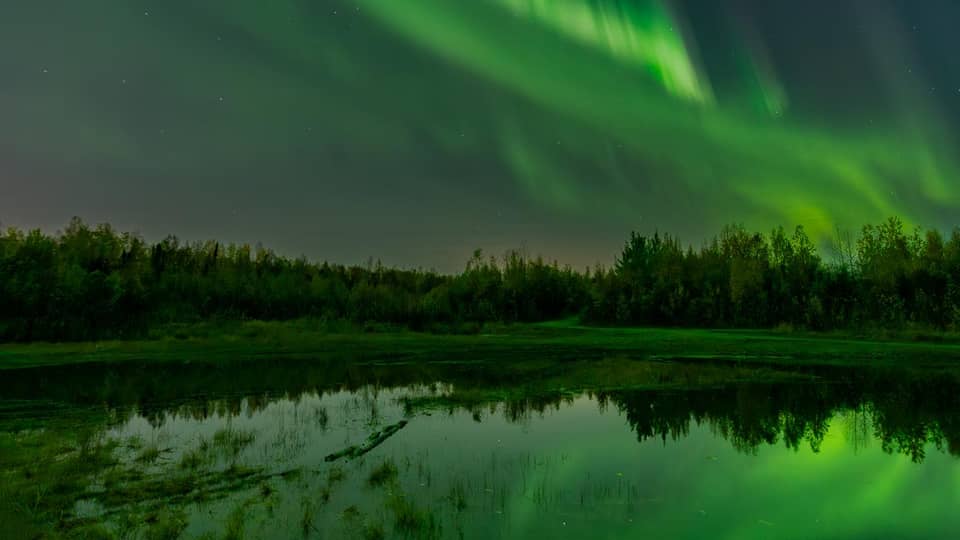
Aurora over lakes and green forest with no snow yet, and mild nights around 48°F.
Your trip is before the 21st, or you want snow in your photos.
Reflections in still water and nights around 36°F, with about 9 hours of darkness.
You want a dog sled night; it needs snow.
About 12½ hours of darkness before the deep cold, with lows around 18°F.
You want frozen-lake ice fishing.
Long nights, about 15½ hours of darkness, before the holiday season.
You haven’t packed for nights around −4°F.
The longest nights of the year, about 17½ hours of darkness, and the dog sled from December 1.
You want the clearest skies; December is tied for the cloudiest at 36%.
Deep-winter scenery and about 16½ hours of darkness.
You don’t cope well with −17°F nights.
Clearer skies, 42%, with about 13½ hours of darkness.
Cold is a deal breaker: lows average −11°F.
The clearest month of the season, 45%, with about 10½ hours of darkness and milder nights.
You want darkness early in the evening.
The mildest nights of the season and 42% clear, until April 21.
Your trip is after April 21; the nights get too bright.
Long daylight for daytime Alaska; the aurora season returns on August 21.
You want to see the aurora: the nights aren’t dark enough.
The midnight sun; the aurora season returns on August 21.
You want to see the aurora: there is no real darkness.
Long summer days; the aurora season returns on August 21.
You want to see the aurora: the nights aren’t dark enough.
SOURCENOAA 1991–2020 normals via Current Results · WeatherSpark · dark hours: our calculation for the 15th of each month, sun 6°+ below the horizon